



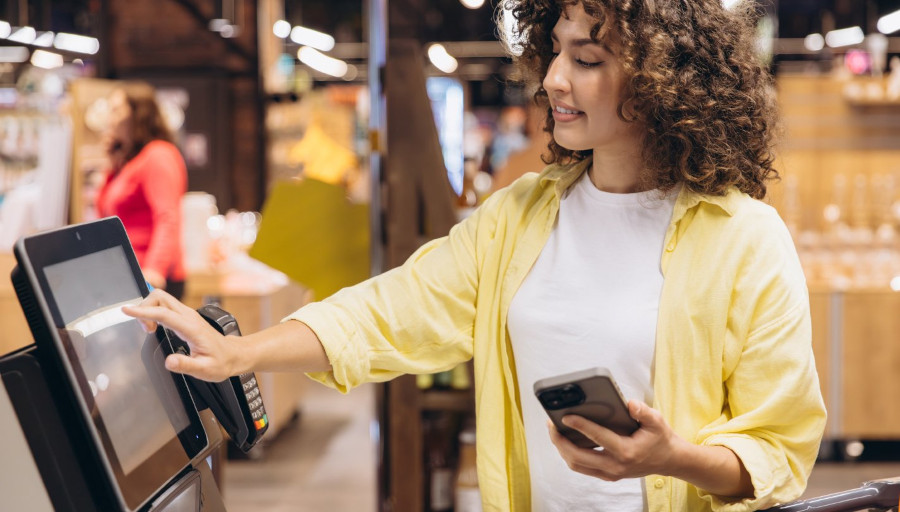
FOR A LONG TIME, SELF-SERVICE CAME WITH A SIMPLE, UNSPOKEN NARRATIVE: EFFICIENCY.
Fewer staff needed.
Faster throughput.
Lower operational costs.
And while those benefits still matter, they’re no longer the most important part of the story. In fact, focusing too heavily on cost reduction risks missing the real reason guests increasingly choose self-service in the first place.
It’s not about helping hoteliers do more with less. It’s about giving people greater control over their experience.
What guests really want from self-service
Today’s guests are time poor, interruption weary, and deeply conscious of effort. What they value most in everyday interactions is the ability to stay in control of their own progress.
Control over:
- How quickly something happens
- How much interaction is required
- How much context they need to explain
Self-service, at its best, removes dependency. It allows customers to move at their own pace, avoid unnecessary friction, and complete a task without waiting for permission or assistance.
That sense of autonomy is powerful – and once experienced, it’s hard to give up.
What does great self-service look like?
The most successful self-service experiences are almost invisible.
Customers don’t think “this is a great kiosk” or “this is well designed self-checkout". They think “that was quick” or “that was easy.”
Nothing about the technology draws attention to itself. There’s no sense of achievement or novelty. Just momentum.
And that’s the real measure of success: when self-service stops feeling like a channel and starts feeling like a natural extension of customer intent.
Where self-service can go wrong
Where self-service can backfire is when it promises control but delivers responsibility without agency.
This means a machine that asks customers to fix problems they didn’t create; or a flow that forces unnecessary steps with no explanation; or maybe a moment where progress halts and the only option is to wait.
In those situations, self-service doesn’t feel empowering – it feels like abandonment.
The frustration isn’t just about the delay. It’s about the sudden loss of autonomy. The experience shifts from “I’m in control” to “I’m stuck.”
That emotional reversal is what damages trust
Technology to empower people not replace them
One of the biggest mistakes hotel operators make is treating self-service as a substitute for human interaction rather than a complement to it.
Guests don’t want only self-service.
They want the option of self-service.
Choice is what preserves control.
Some moments call for speed and independence. Others call for reassurance, help or flexibility. A great guest experience recognises that these needs fluctuate – sometimes within the same journey.
The goal isn’t to push guests down one path. It’s to let them choose when and how they engage.
Why it matters now
Economic pressure has sharpened focus on productivity, but it has also made guests more conscious of value – not just in price, but in experience.
Time, patience and attention all feel more limited than they used to. Anything that wastes them feels disproportionally irritating.
At the same time, everyday digital experiences continue to normalise friction-free interaction. Guests increasingly expect routine tasks to work smoothly, without supervision or explanation.
Self-service sits right at the intersection of these expectations – which makes it either a powerful trust builder or a highly visible point of failure.
The future of self-service is confidence, not novelty
The next phase of self-service won’t be defined by more screens, more features or more automation.
It will be defined by how confidently customers can move through an experience without second guessing the process – or themselves.
When self-service is designed around control rather than cost, it becomes something customers actively choose, not something they tolerate.
And in a landscape where loyalty is fragile and patience is scarce, giving customers that sense of control may be one of the most valuable things a hotel operator can offer.
Have a chat with our team to discover Glory’s full spectrum of smart self-service and unified commerce solutions, and how we can help you deliver the choice and control your guests demand.
Contact details
David O’Meara, Sales Director Ireland david.omeara@ie.glory-global.com Web www.glory-global.com/ireland 086 383 0650
 ©2026 Irish Hotels Federation
 13 Northbrook Road, Dublin 6, D06 PK18, Ireland Tel: 01 497 6459 | E-mail: info@ihf.ie